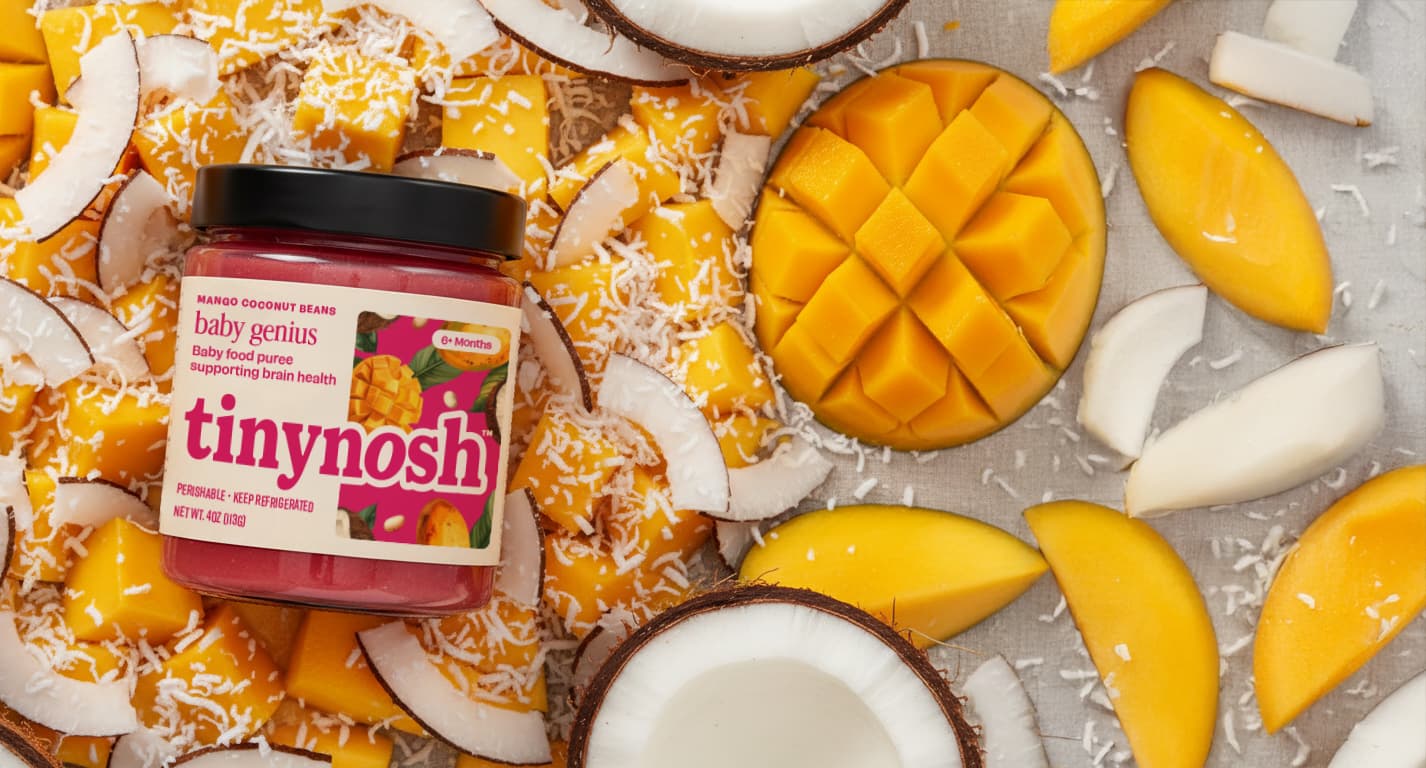
Why glass
4 reasons parents are switching from pouches to glass jars
Pouches are convenient. So why are parents going back to glass? Here's 4 reasons why.
Pediatricians recommend alternatives to plastic
Especially when cooking or serving hot foods, use alternatives to plastic, such as glass or stainless steel, when possible.”
Shelf-stable baby food meets its packaging hot. Heated, stored, or squeezed, plastic can shed chemicals into food. Consumer Reports found phthalates in all seven baby foods it tested.
Packaging comes with chemicals


More than 14,000 chemicals are used in materials that touch food. Researchers have found evidence of about a quarter of them in human bodies. Nobody signed up for that exposure. It rode in with the packaging. Glass is the exception. There are no plasticizers or coatings.
Babies are the most exposed to plastics
Microplastic concentrations measured in stool.
Pound for pound, babies eat and drink more than anyone. NYU researchers found more than ten times the concentration of certain microplastics in infant stool compared with adults.
Brands are only required to test for 4 heavy metals
California law requires testing for four heavy metals. That's it. Nothing requires a brand to test for other contaminants, and nothing requires anyone to publish what they find.
We don't stop at glass
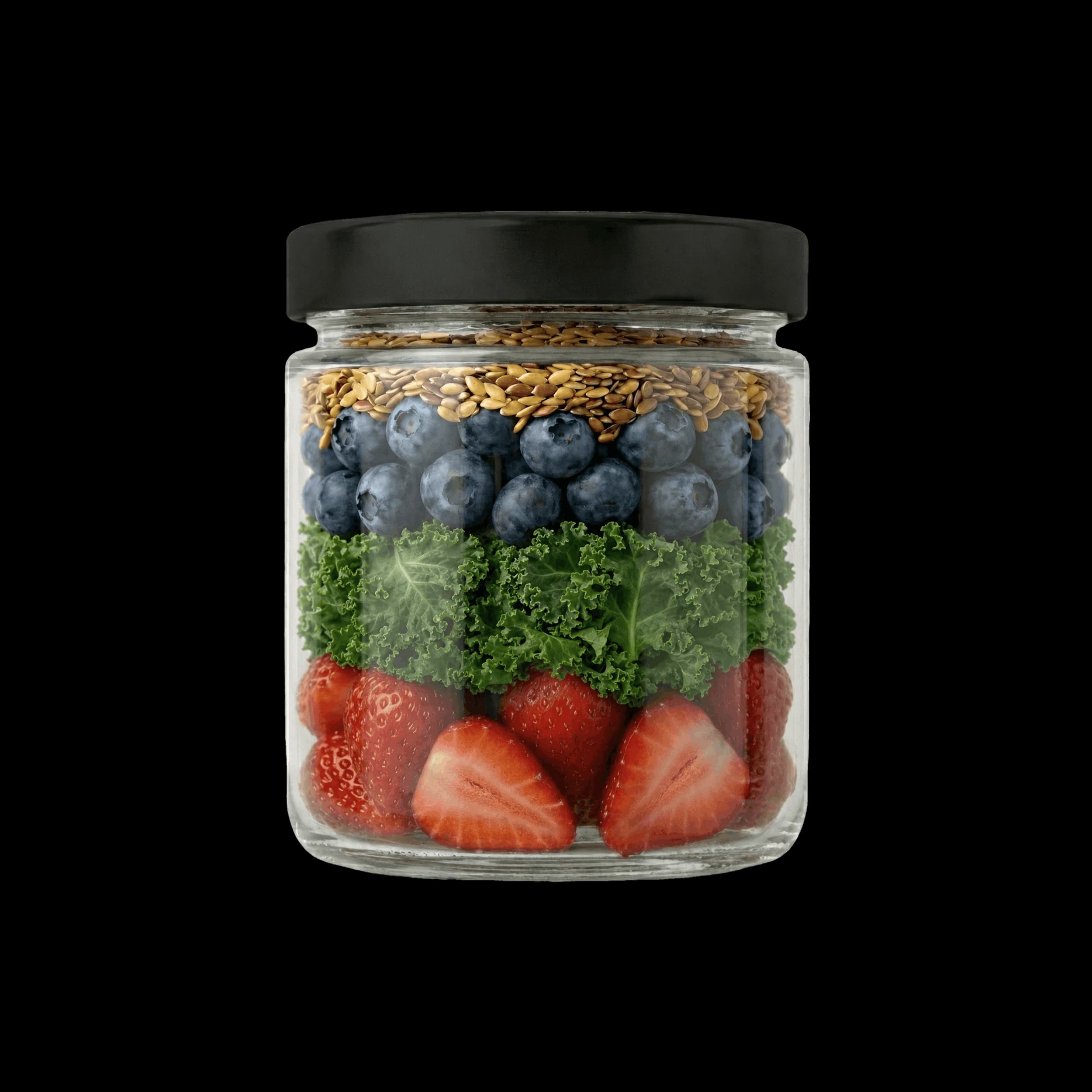
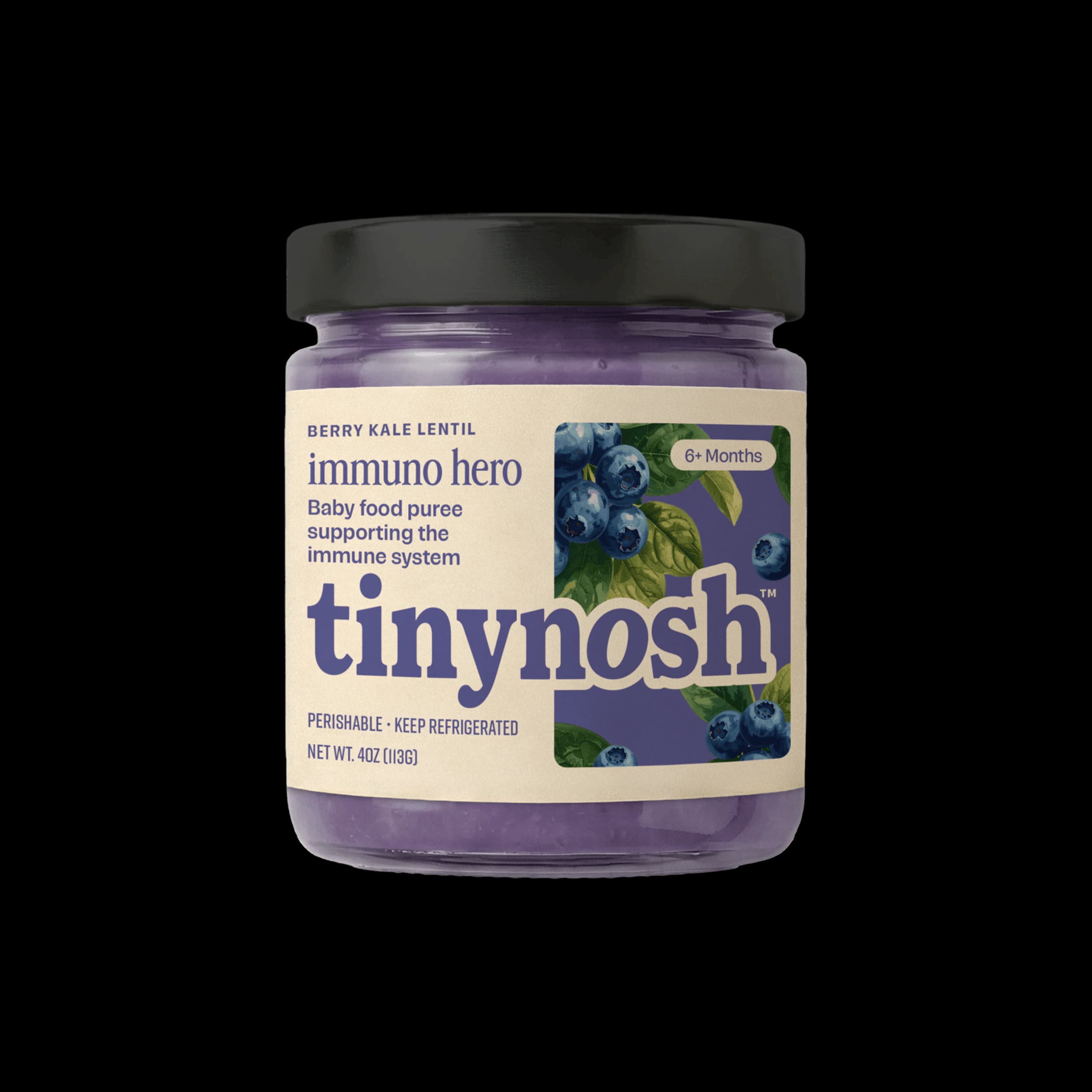
Glass costs more than plastic. So does testing for 200+ contaminants when the law requires 4. We signed up for both, and we publish every result.
Endorsed by pediatric dietitians
“Tinynosh recipes were developed with intention and care - prioritizing real ingredients, food safety, and nutrition - exactly what I look for as a pediatric dietitian.”

Rachel Rothman, MS, RD, CLEC
Pediatric Dietitian & Feeding Expert, Nutrition in Bloom

30% off your first order when you subscribe
30% off your first order when you subscribe
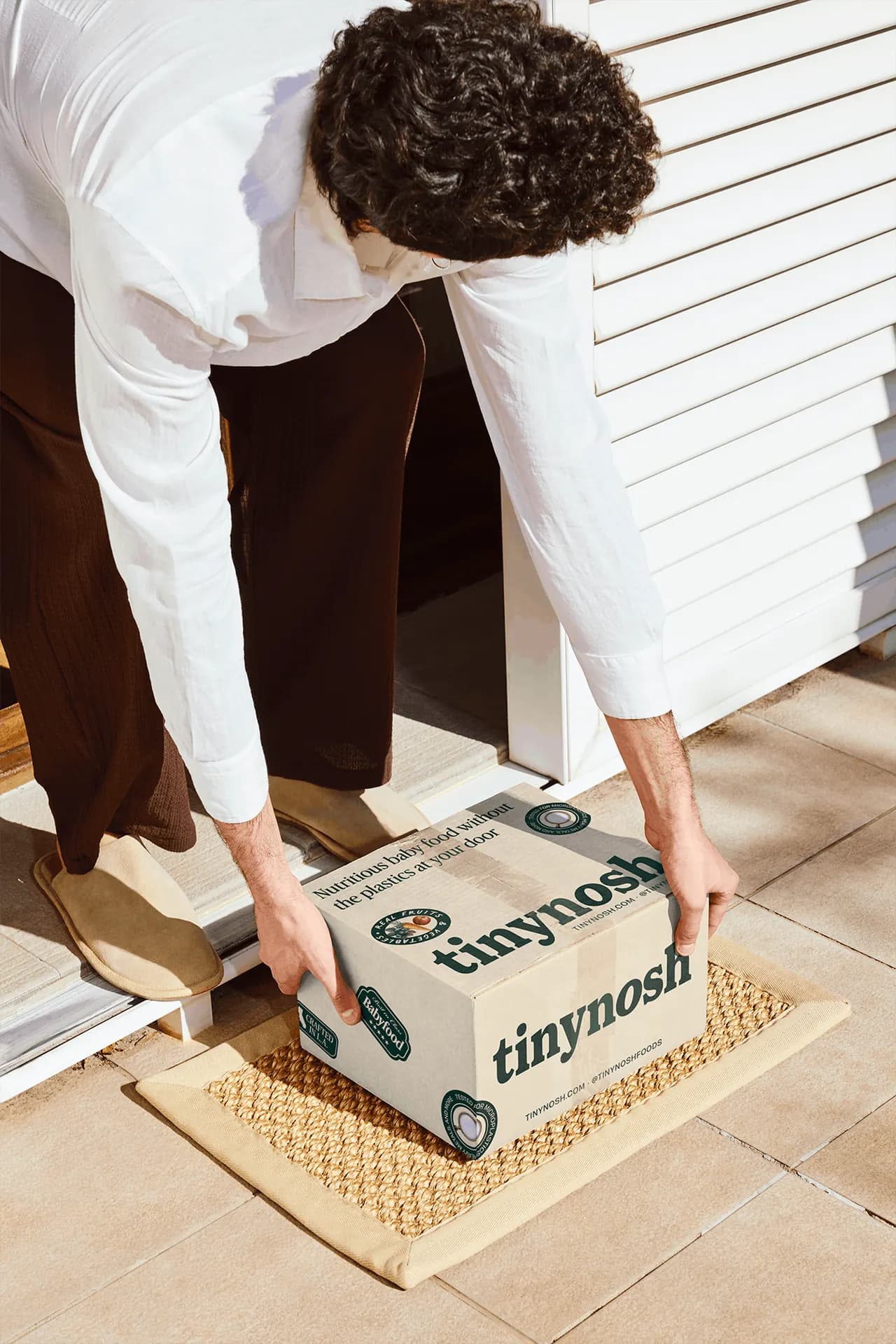
tinynosh is refrigerated baby food for 6 months and up. Prepared in small batches in L.A., packed in glass jars with PVC-free lids, delivered cold across California, Oregon, and Washington.
30% off your first order when you subscribe.
FAQs
We chose glass because it's inert. Unlike many other food packaging materials, glass doesn't transfer compounds to the food it holds. Studies of food packaging materials have shown that some compounds can migrate from packaging into food, particularly when packaging is exposed to heat or acidic foods. Glass doesn't have that property, which is why it's been used for food and beverage storage for centuries. It's also recyclable wherever curbside glass recycling is offered.
Yes! Each tinynosh recipe is tested monthly by an independent laboratory for lead, arsenic, cadmium, and mercury, the four heavy metals covered by FDA's Closer to Zero initiative. To date, FDA has only finalized an action level for lead (<=10 ppb in processed baby food), which we use as our acceptance threshold. Where FDA has not yet finalized action levels, we apply the European Union's maximum levels for foods intended for infants and young children for cadmium (<=40 ppb) and inorganic arsenic (<=20 ppb). The European Union hasn't set a maximum level for mercury, so we set our own internal threshold (<=10 ppb), informed by toxicological reference values for mercury.
All jars, even glass jars with a metal lid, rely on a gasket material to form a reliable seal. Most metal lug lids sold in the US use gaskets made from polyvinyl chloride (PVC) plastisol, which contains plasticizers. Studies of European markets have shown that these plasticizers can migrate from gaskets into food, particularly fatty or oily foods. We source our lids from a European manufacturer that produces PVC-free closures using alternative gasket compounds without added plasticizers, so the only materials touching your baby's food are the glass jar and a non-PVC liner.
Refrigeration lets us use a more gentle heat process than what's needed for shelf-stable baby food, which typically uses much higher temperatures and longer hold times. The tradeoff is shorter shelf life and the need for refrigerated shipping and storage, which we've built our supply chain around.
You can easily choose how many noshes you want in each delivery based on what works best for your little one. Your card on file is charged on the day each order is processed, before shipment. We email you ahead of every shipment so you can review and adjust your order. You can change, skip, pause, or cancel any time before your next order's cutoff through your account dashboard. Your box arrives packed cold; put the jars in the refrigerator as soon as possible.