Testing
4 things to check before trusting “tested” baby food.
Testing claims are on every baby food website. The questions that matter: tested for what, how often, and can you actually see the results?
Heavy metal testing is the legal minimum

Since 2025, California law has required baby food makers to test finished products monthly for lead, arsenic, cadmium, and mercury, publish the results, and link to them with a QR code on the label. But brands that stop at “tested for heavy metals” are only meeting California's legal minimum.
You shouldn’t have to hunt for the results
Parents should not have to question whether baby food is safe to eat, and that's why California law requires companies to disclose the presence of heavy metals.”
When Consumer Reports checked 39 brands' disclosures, more than half required a UPC, lot code, or best-by date to see any results. The California Attorney General even issued an enforcement advisory letter to baby food manufacturers, reminding them of their obligations.
The law stops at 4 heavy metals
Heavy metals are the headline, but the law says nothing about phthalates, bisphenols, pesticide residues, or glyphosate. Check what else a brand tests for. We screen for 200+ contaminants.
Questions to ask any brand
1. What do you test for beyond the 4 required heavy metals?
Ask about plastic chemicals (phthalates, bisphenols), pesticides, and glyphosate.
2. Do you publish the actual results?
Many brands claim they test for more, very few publish the actual results for you to see.
3. What thresholds do you hold results to?
Parents are starting to compare to the EU limits, which are stricter for many contaminants.
4. What touches the food in your packaging?
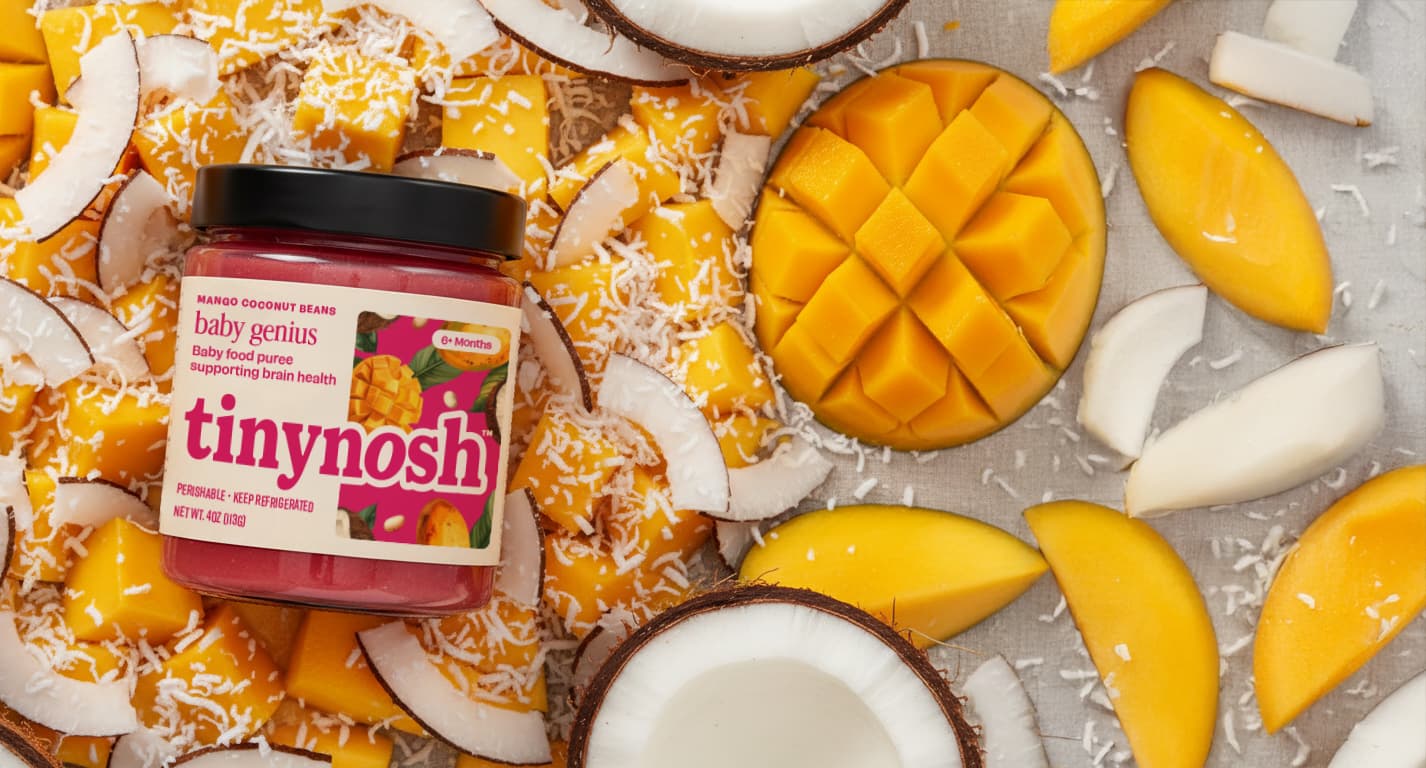
Plastic pouch or glass jar, and if glass, is the lid PVC-free? The lid touches the food too.
We built tinynosh to solve these problems
Published test results for 200+ contaminants
- Heavy metals
- Phthalates
- Bisphenols
- Pesticides
- Glyphosate
We test for 200+ contaminants, including plastic chemicals, pesticides, and glyphosate. We publish every result with the limit next to it, and every jar is glass with a PVC-free lid, sourced from Europe.
Endorsed by pediatric dietitians
“Tinynosh recipes were developed with intention and care - prioritizing real ingredients, food safety, and nutrition - exactly what I look for as a pediatric dietitian.”

Rachel Rothman, MS, RD, CLEC
Pediatric Dietitian & Feeding Expert, Nutrition in Bloom
30% off your first order when you subscribe
30% off your first order when you subscribe
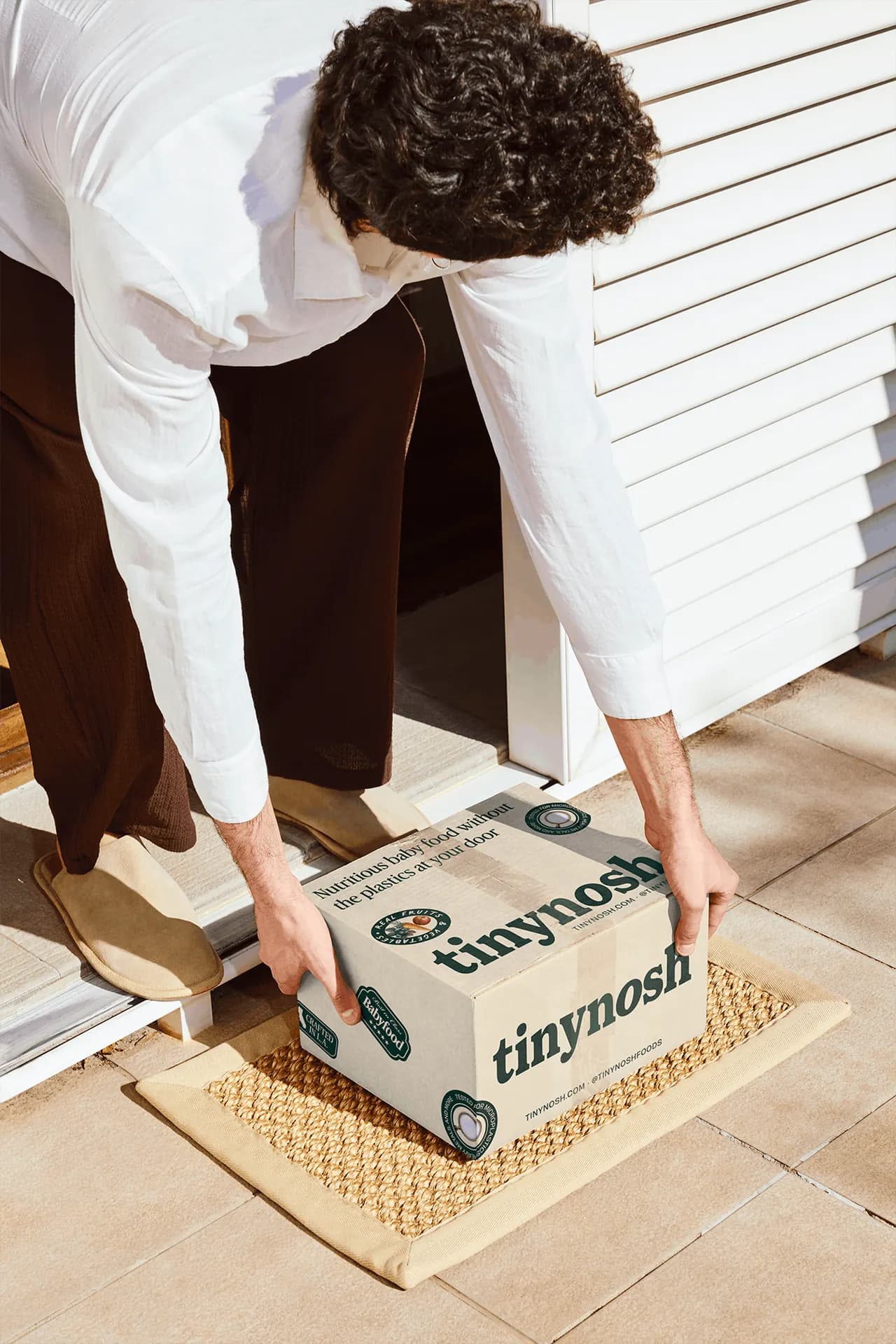
tinynosh is refrigerated baby food for 6 months and up. Prepared in small batches in L.A., packed in glass jars with PVC-free lids, delivered cold across California, Oregon, and Washington.
30% off your first order when you subscribe.